 MOHANA HOMES
If you’re reading this, there’s a decent chance you’ve just opened an envelope, a door, or an email you didn’t want to. A stop-work order taped to the site. A notice from the city. A neighbour’s complaint that turned into an inspector standing in your backyard. Maybe a renovation the previous owner did that your real-estate lawyer just flagged.
First, take a breath. A building violation feels like a disaster, and the fines you’ve probably already Googled don’t help. But in the vast majority of cases, unpermitted work is a problem with a process, not a sentence. There is a defined path back to “fully legal and documented,” and most homeowners walk it without their house being torn down.
This guide explains, in plain language, what a building violation actually is in Ontario, what happens if you’ve been caught, and the step-by-step path to fixing it, including the one distinction that determines whether you’re facing a paperwork exercise or something more serious.
A quick, honest note up front: this is educational, not legal advice, and the specifics genuinely vary from one municipality to the next. Treat it as a map, not a contract.
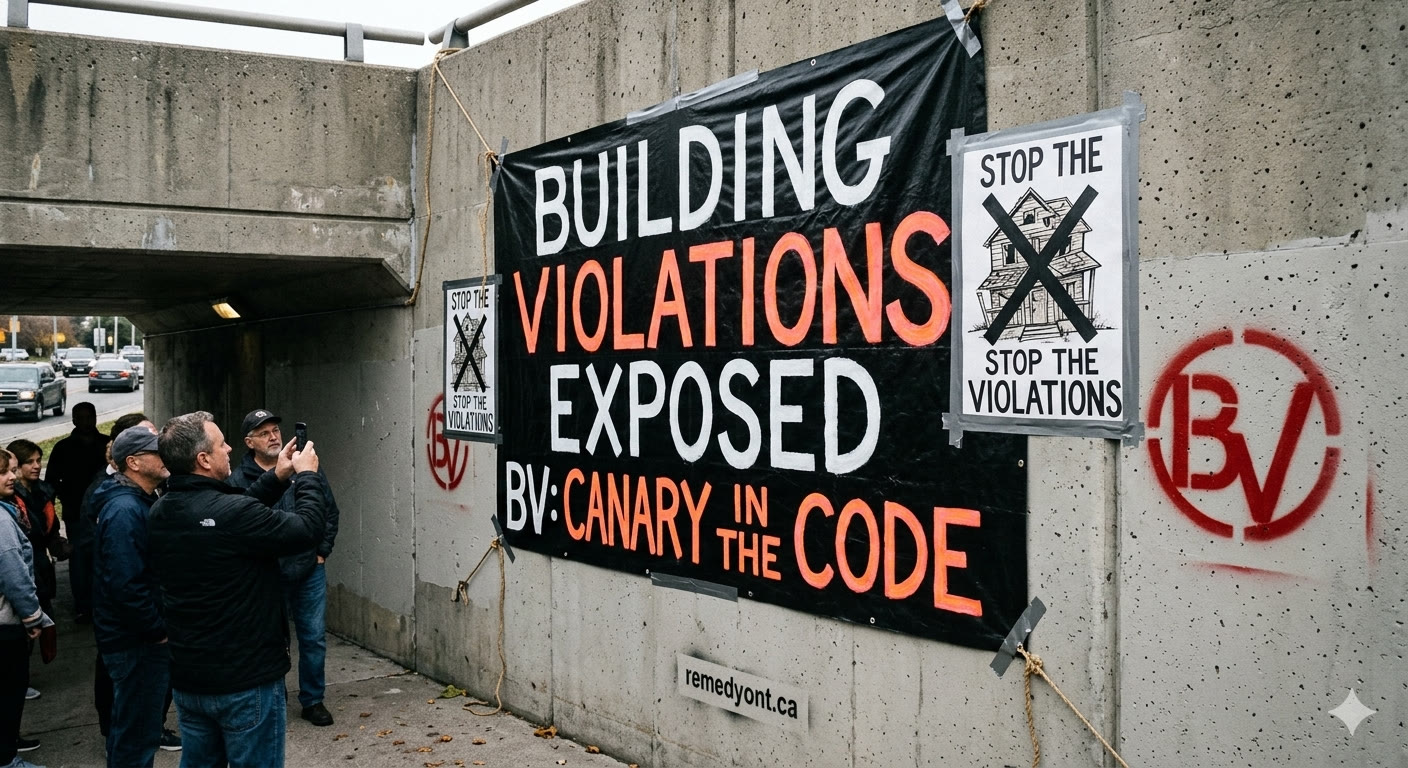
What counts as a building violation in Ontario?
Most people picture a violation as “I built something without a permit.” That’s the most common version, but it’s not the only one. Broadly, you can run into four distinct problems:
- No permit for work that needed one. In Ontario, a building permit is required for most construction, demolition, structural alteration, and change of use under the Building Code Act, 1992. A surprising amount of “minor” work qualifies, finished basements, decks above a certain size, structural openings, new plumbing, second units, additions. If it touches structure, life safety, or systems, assume it needed a permit.
- Work that doesn’t meet the Ontario Building Code. A permit confirms your *plans* are compliant; inspections confirm the *work* matches those plans. Work done off-the-books skips both checks, which is exactly why the city cares, not to punish ambition, but because nobody verified the framing, the fire separation, or the wiring.
- Zoning non-compliance. This is a different animal entirely (more on it below). It’s not “is the work safe?”, it’s “are you even *allowed* to build that, there, at that size?” Think height, setbacks from the property line, lot coverage, or running a use the zoning doesn’t permit.
- Change of use without approval. Turning a single-family home into a duplex, or a basement into a separate rental suite, can require approval even when the construction looks modest.
It’s also worth knowing the technical goalposts moved recently. The 2024 edition of the Ontario Building Code has been in force since January 1, 2025, and it now adopts the National Building Code of Canada (2020) with Ontario-specific amendments. The practical upshot for you: older unpermitted work generally gets assessed against *current* code when you go to legalize it, not the code that existed when it was built.
How does the city even find out?
Usually one of four ways: a neighbour complaint, an inspector noticing work from the street, a separate utility or electrical (ESA) interaction that surfaces it, or, most commonly and most painfully, a buyer’s home inspector and lawyer during a sale, because permit history is public and they all check it.
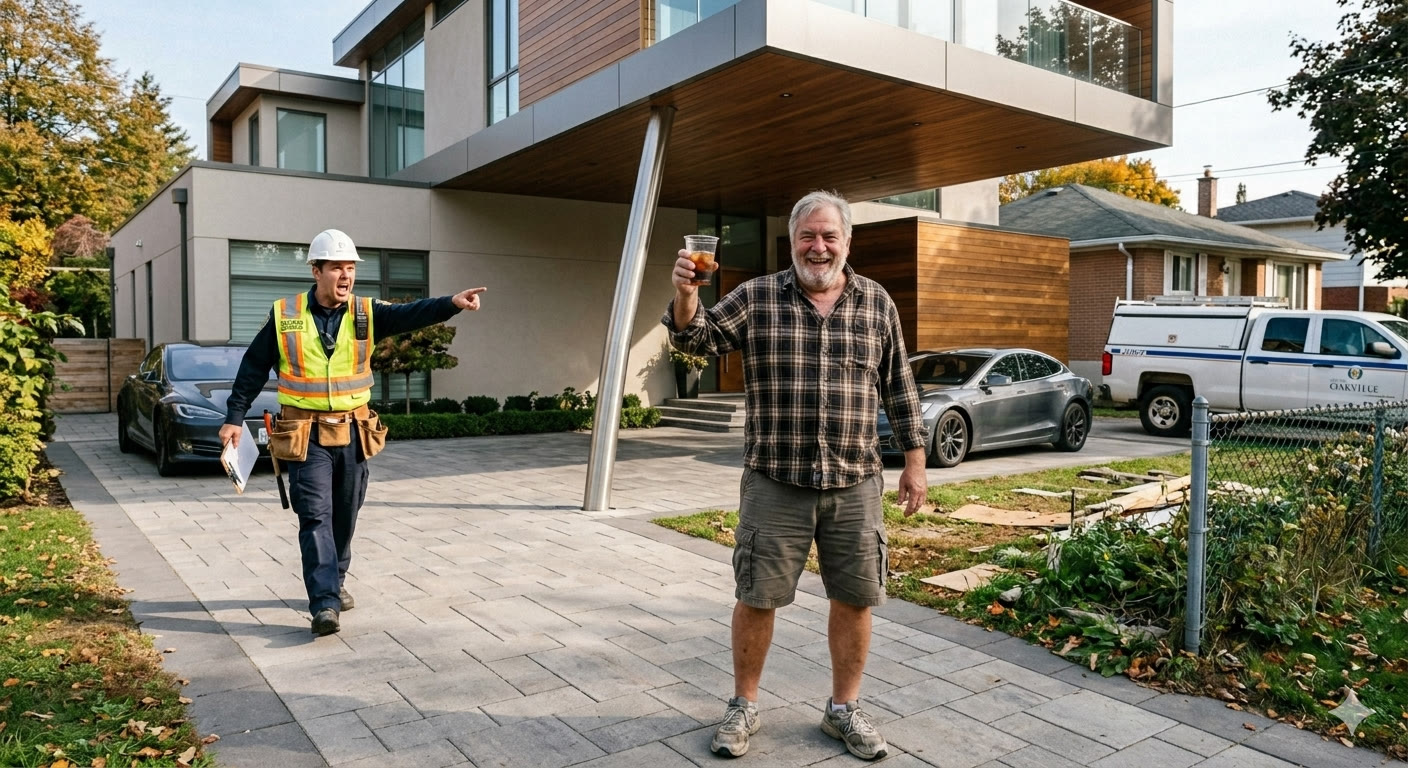
What happens if you’ve been caught?
Enforcement in Ontario runs through orders, not surprise demolition crews. Depending on the situation, a municipality can issue a Stop Work Order, an Order to Comply, an Order Not to Cover or Enclose, or an Order to Uncover (so an inspector can see work that’s already been hidden behind drywall or backfill). Ignoring an order is its own separate offence, so the worst move available to you is to do nothing and hope it disappears.
On the fines everyone fixates on: under the Building Code Act, an individual found guilty of building without a permit can be fined up to $50,000 for a first offence and up to $100,000 for subsequent offences, with higher maximums for corporations. Read that as a ceiling, not a forecast. In practice, residential fines are typically a small fraction of those numbers. For most homeowners, the real cost isn’t the fine, it’s the remediation, the municipal surcharges, and the time.
Then there are the consequences that don’t show up as a line item:
- Insurance exposure. Home insurance policies generally assume your home is code-compliant. If something goes wrong in or because of unpermitted work, a claim can be denied, leaving you personally on the hook.
- Resale problems. Open or missing permits regularly delay or kill sales. You have disclosure obligations, and the buyer’s inspector, lawyer, and lender all look for permit history. Sellers have ended up in litigation after closing over work that was never legalized.
- A permanent question mark on your property. Until it’s resolved, it follows the title.
The single most important question: Building Code problem, or zoning problem?
This is the distinction that separates a clear answer from internet noise, and it’s the one most generic guides blur. Before anything else, you need to know which of two completely separate tracks you’re on, because they have different remedies, different timelines, and very different worst-case scenarios.
A Building Code problem is about safety and permits. The work may be perfectly *allowed* on your lot; it just wasn’t approved or inspected. The fix is a process: get the permit, prove the work is compliant (sometimes by opening it up), correct anything that isn’t, pass inspection, close it out. Annoying, but almost always solvable.
A zoning problem is about permission. Here, the issue is that you built something the zoning by-law doesn’t allow, too tall, too close to the line, too much lot coverage, or a use that isn’t permitted. You can’t simply “permit your way” out of a zoning violation. You either bring the structure into compliance, or you apply to the local Committee of Adjustment for a minor variance, essentially asking the municipality to bless the deviation.
And here’s the nuance almost nobody explains: the Committee of Adjustment is required to consider your application *as if the construction had never been started or completed*, and it cannot consider the fact that you’re being prosecuted for illegal work. In other words, the variance process won’t “forgive” what you did, it rules purely on the planning merits of the request, on a separate track from the enforcement file. You can be running both at once. It also means a variance is never guaranteed.
One more sequencing detail that trips people up: a zoning certificate (confirmation your project complies with the zoning by-law) is generally required *before* you can submit a complete building permit application. Zoning comes first; the permit follows.
The reason this matters so much: a Building Code problem is usually “expensive and tedious.” An unresolvable zoning problem can be “modify it or remove it.” Knowing which one you have, early, changes every decision after it.
How to legalize unpermitted work: the step-by-step path
- Read the order carefully and find the deadline. Orders spell out the alleged violation, the actions required, and a date. Note the name of the officer on it, they are a real person you can call with questions, and early, cooperative contact tends to go better than silence.
- Stop work if you’ve been ordered to. Continuing after a stop-work order compounds the problem and the penalties.
- Get a professional diagnosis: code, zoning, or both. This is the step to do *before* spending money in any direction. An experienced eye can usually tell you quickly whether you’re looking at a paperwork fix, a variance fight, or a removal, and that determines everything else.
- Engage the right people (see the next section, designer vs. architect vs. engineer vs. trades).
- Prepare compliant “as-built” drawings. Legalizing existing work means documenting what’s actually there in a set of drawings that demonstrate code compliance, the same package you’d have submitted before building, produced after the fact.
- Clear zoning. Obtain the zoning certificate; if the work doesn’t comply, file for a minor variance (or, for larger deviations, a zoning by-law amendment) with the Committee of Adjustment.
- Submit the after-the-fact building permit application. Pay the standard permit fees plus whatever “work without a permit” surcharge your municipality applies. Expect a processing delay during which work stays stopped.
- Pass inspections. You may be required to uncover finished areas so an inspector can verify what’s behind them. Correct any deficiencies they identify.
- Final inspection and close-out. Once everything passes, the permit is closed. Now the work is legal *and* documented, which is what protects your insurance and your eventual sale.
Do you need an architect, an engineer, a designer, or a contractor?
Honest answer: it depends on the scope, and getting this wrong is one of the most common ways homeowners waste months. The short version:
- A qualified designer (BCIN-registered) can prepare and submit drawings for many house-scale residential projects.
- An architect (OAA) or a professional engineer (PEO, with a Certificate of Authorization) is required where the Building Code calls for it, larger buildings, significant structural work, and certain other scopes. If your situation involves structure, this is often non-negotiable.
- Licensed trades handle the work itself, and electrical is its own separate stream entirely, typically permitted and inspected through the Electrical Safety Authority (ESA), not the city.
- A general contractor carries out any physical remediation the city requires.
The reason a violation can spiral isn’t usually any single one of these, it’s the *hand-offs* between them. The designer waits on the zoning result; the variance waits on the drawings; the construction fix waits on the permit; the inspection sends everyone back a step. When the drawings, the variance application, and the construction are coordinated by one team that has run this exact gauntlet before, the dead time between steps shrinks dramatically. When they’re four separate parties emailing each other, it doesn’t.
Why the municipality matters more than you’d think
Here’s something that surprises people: the *technical* code is provincial, the Ontario Building Code is the same baseline whether you’re in Etobicoke or Milton. But almost everything *around* it, enforcement, fees, zoning, and process, is local, and the differences are not small.
- Toronto applies a “work without a permit” administrative fee equal to 50% of the permit fees, processes applications through its own portal, and has Committees of Adjustment organized by district. Its zoning by-law is dense, and infill lots routinely need variances.
- Mississauga runs its permit process through its ePlans online system, with its own fee schedule (residential permits start in the low hundreds, plus a submission deposit) and its own Committee of Adjustment for zoning exceptions. Different portal, different forms, different timelines.
- Smaller municipalities can be stricter on surcharges, not looser, some add a penalty equal to 200% of the permit fee for after-the-fact applications.
So a homeowner who got a violation in Mississauga and assumes “it works like Toronto” is already off on the wrong foot. The code is provincial; the rulebook for *fixing* a violation is municipal. Familiarity with the specific city’s system, its surcharges, its portal, its zoning quirks, the rhythm of its Committee of Adjustment, is the difference between a clean six-week resolution and a six-month one.
The part nobody wants to hear: when it can’t be legalized
Most unpermitted work can be legalized. Some can’t. If a structure can’t be made to meet the Building Code, or the zoning deviation is too significant and a variance is refused, a municipality can order the work altered or demolished, at your expense.
This is exactly why an honest early assessment is worth more than reassurance. A good professional will tell you up front whether the work can realistically be saved, and if it can’t, will look for the least-destructive route: what can be modified rather than removed, whether a partial variance is achievable, how to stage the fix to minimize cost. “We’ll make it disappear” is the answer you want to hear and the one to be most suspicious of. “Here’s what’s salvageable and here’s what isn’t” is the one that actually protects you.
How to avoid all of this next time
The cheapest version of this entire article is one sentence: pull the permit first. Permits feel like friction, but the friction is the system catching problems while they’re still cheap to fix, before they’re sealed inside a wall. Before any future project that touches structure, systems, or use, confirm whether it needs a permit. A short conversation with a professional or your municipality at the start costs nothing compared to legalizing the same work after the fact.
Frequently asked questions
Can I get a building permit for work that’s already done?
Yes. After-the-fact (sometimes called “as-built”) permits exist precisely for this. You document the existing work in compliant drawings, the municipality reviews them, you may have to open up finished areas so it can be inspected, and once it passes, the permit is closed.
How much are the fines for building without a permit in Ontario?
The Building Code Act allows fines up to $50,000 for a first offence for an individual (higher for repeat offences and corporations), but those are maximums. Real-world residential fines are usually far lower. For most homeowners, the larger costs are the remediation and the municipal surcharge for working without a permit.
Will I have to tear out the work?
Sometimes, but it’s not the default. If the work can be made code- and zoning-compliant, it can usually be legalized as-is or with modifications. Removal is generally reserved for work that can’t be made safe or can’t be permitted on that lot. A proper assessment tells you which camp you’re in early.
Do I need an architect, or just a designer?
It depends on scope. Many house-scale residential projects can be handled by a BCIN-registered designer. Larger, structural, or certain specific projects require a licensed architect (OAA) or professional engineer (PEO).
Does unpermitted work affect my insurance and my ability to sell?
Yes, on both counts. It can void or complicate insurance coverage, and it regularly delays or derails sales because permit history is public and buyers’ inspectors, lawyers, and lenders look for it.
How long does it take to legalize unpermitted work?
It varies by municipality and complexity. The permit review itself can run from a couple of weeks to over a month, and if a zoning variance is involved, add the Committee of Adjustment’s hearing timeline on top. Getting a complete, correct application in the first time is the single biggest factor in keeping it short.
If you’re staring at an order right now
The instinct is to either panic or ignore it. Both are expensive. The productive move is a clear-eyed assessment of which problem you actually have, followed by a complete application that gets it right the first time.
If you’d like a straight answer on whether your situation is a paperwork fix or something that needs a variance, and the most direct route through your specific municipality, book a free consultation. From design and build to project management, we work across the GTA and throughout Ontario, and we’ll tell you honestly what it takes to get your property fully compliant.